
Avoid The Deductible Trap.
Retain and Win Clients With New Expertise.
In 2026, a California HOA had a $45m earthquake insurance limit and 10% per-building deductible – and no expected payout for 5 out of 6 buildings.
| Building | Replacement Cost | Deductible (10%) | Expected Loss | Deductible Gap |
|---|---|---|---|---|
| 101 | $43,615,650 | $4,361,565 | $3,053,096 | ($1,308,470) |
| 102 | $37,334,050 | $3,733,405 | $2,613,384 | ($1,120,022) |
| 103 | $45,006,000 | $4,500,600 | $3,150,420 | ($1,350,180) |
| 104 | $51,650,300 | $5,165,030 | $3,615,521 | ($1,549,509) |
| 105 | $45,685,900 | $4,568,590 | $3,198,013 | ($1,370,577) |
| Clubhouse | $62,400,000 | $6,240,000 | $8,112,000 | +$1,872,000 (Covered) |
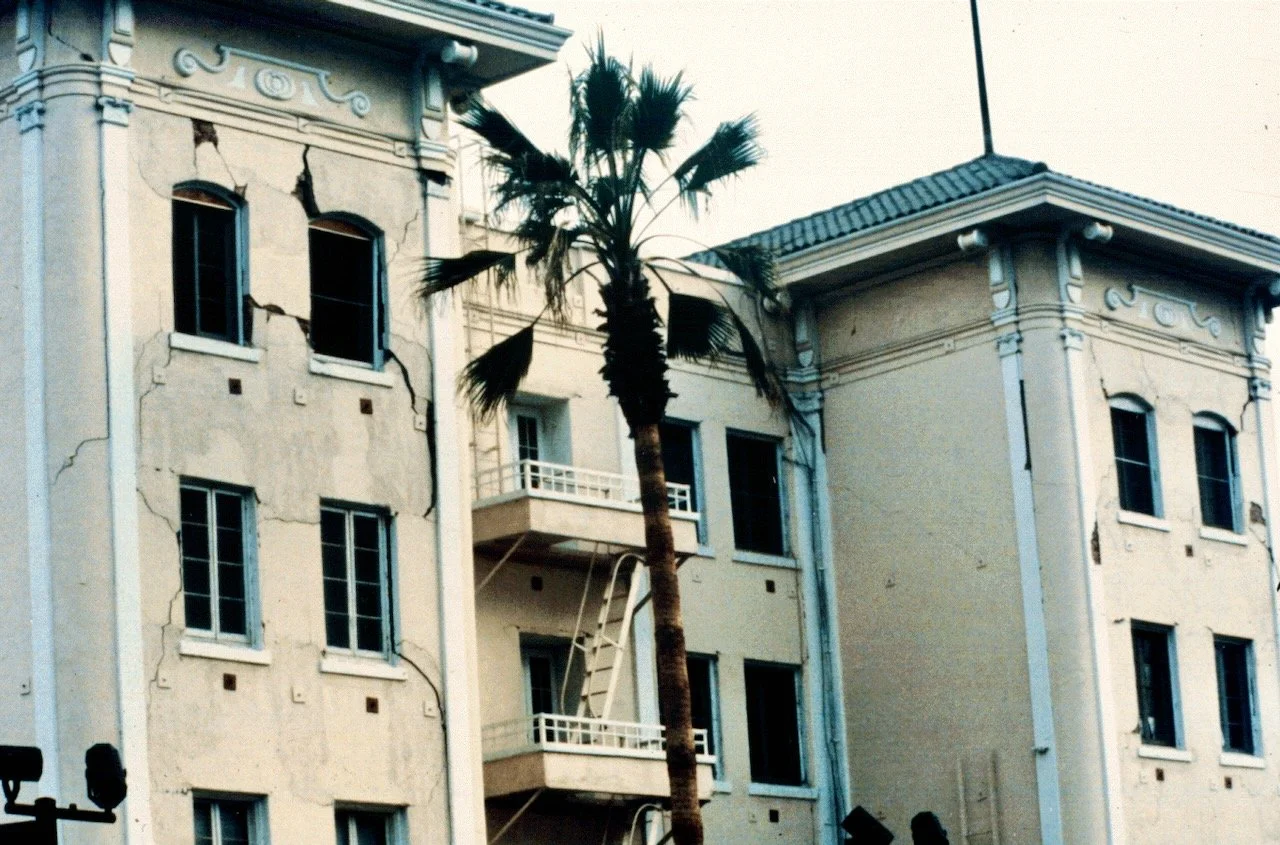
Northridge, CA, 1994
Be the earthquake expert with practical, elite-level engineering input that doesn’t slow you down.
See how we use building-level loss estimates to help brokers restructure deductibles and secure wins for high-value HOA clients.

Some of our clients
Learn how the broker fixed it ⤵





Why Top California Brokers Partner with EQE Risk
Differentiate your pitch.
Most brokers bring the same market data to the table. When you bring EQE Risk’s independent building-level analysis, you aren’t just selling a policy—you’re providing a risk management strategy that sets you apart from the competition. Previously, this level of expertise was only available at the industrial insurance or facultative reinsurance level.
Strengthen your submissions.
Carriers reward granular data. A submission backed by professional loss analysis— based on elite engineering expertise and accounting for soil, construction, and seismicity—allows underwriters to move past "worst-case" assumptions and offer more favorable terms.
Fix the deductible gap.
Real, building-specific data is a game changer for earthquake insurance programs. Per-building deductibles are the biggest "hidden" risk for HOAs and multifamily portfolios. We give you the data to show clients exactly where their exposure lies, allowing you to restructure deductibles and limits with precision.
We’re Your Technical and Strategic Edge – Not Your Competition.
As an independent risk engineering firm, our goal is to empower brokers, not bypass them. We provide high-quality assessment data that makes your advice more precise and your programs more effective.
By working with us before or during a renewal, you demonstrate a sophisticated, proactive approach to risk that builds long-term client loyalty. We make you the earthquake expert in addition to the insurance expert you already are. And we do it at a cost that is typically a fraction of a single year’s insurance premium.
What You Get:
Per-building loss estimates for your exact buildings and site.
Data for program structuring — to optimize deductibles, set appropriate insurance limits, and optimize costs.
Loss reduction advice— real-world, low-cost improvements your clients can make to help avoid losses in the first place.
Strategic advice for managing risk — exclusive insight based on decades of first-hand earthquake losses around the world, similar to what we provide for our major corporate and insurance clients. This quality of insight has never before been available to retail insurance brokers in California.
Case Studies
Recent, real-world case studies show how essential building-level loss estimates are to effective insurance programs.
For larger HOAs and property owners, they’re critical.
-
A large California HOA was paying significant annual premiums for an earthquake insurance policy with a $45 million blanket limit and a 10% per-building deductible. Technical analysis revealed that in the most likely seismic scenarios, anticipated damage to most residential buildings was estimated at approximately 7%. Because the per-building deductibles were based on full replacement value regardless of the extent of damage, the HOA faced a "deductible trap" where the insurance would likely pay $0 despite millions in aggregate community damage. Additionally, critical structures were found to be significantly undervalued in existing insurance records.
The broker used precise, building-level damage estimates to re-evaluate insurance limits and restructure deductibles. To mitigate physical risk, the HOA implemented low-cost interventions, such as bracing water heaters and securing gas lines, to avoid preventable structural losses. Simultaneously, the board provided clear communication to residents regarding their individual responsibilities for interior finishes and personal coverage options.
By leveraging technical data, the HOA achieved a superior risk profile while maintaining a similar premium spend. They strategically discontinued ineffective policies for low-risk, retrofitted buildings while maintaining protection for high-risk structures, allowing them to redirect funds into a dedicated self-insurance reserve. Ultimately, the community moved from a high-cost, low-yield policy to a balanced financial plan designed to actually respond when needed.
-
A California HOA near Los Angeles was maintaining a $60 million blanket limit with a 25% per-building deductible. Technical analysis revealed that in a likely earthquake, anticipated damage would likely far exceed both current policy limits and the HOA's ability to pay. Specifically, while the TIVs were recorded at roughly $14 million per building, the actual estimated replacement value was closer to $57 million. Under the existing 25% deductible structure, the HOA faced an estimated deductible of $14.4 million per building—a financial burden that would leave the community with millions in uncovered damages and a policy limit that would be exhausted.
The broker used these precise, building-level loss estimates to re-evaluate the adequacy of the current coverage and understand how the insurance would respond to varying levels of damage. To reduce physical risk, the HOA identified targeted non-structural improvements, such as bracing unanchored boilers and securing low-hanging gas piping in the parking garages. Simultaneously, the board provided clear communication to residents regarding their personal responsibility for unit interiors and personal coverage options to prevent gaps in protection during a claim.
The HOA adjusted policy limits and explored catastrophe-only and parametric insurance options. The community moved toward a financial plan that accounted for the $73 million aggregate deductible and the high-risk nature of the structures. Ultimately, the HOA transitioned from an arbitrary coverage amount to a data-driven program designed to survive a serious, realistic earthquake.
Integrating EQE Risk into Your Renewal Workflow.
Step 1: Pre-Renewal Screening Through a conversation or with our Rapid Risk screening tool, identify which clients are most exposed. This opens the door for a high-value conversation about exposure before the renewal window even opens.
Step 2: Building-Level Analysis We model the community’s specific assets. You get a clear report detailing expected losses, allowing you to build a program tailored efficiently to their specific exposures, especially considering deductibles and limits/sublimits.
Step 3: Program Optimization Use our data to with carriers to improve underwriting and present a clear "Deductible Gap" analysis to the Board. You move from being a "policy vendor" to a "strategic advisor," securing the renewal and protecting your book. We’ll advise you along the way.
-
PMLs reports are generic and transaction-driven. Our assessments are engineering-driven, site-specific, and carried out by highly experienced experts. We move past the "averages" to show exactly how a community’s specific buildings and soil will perform, allowing you to build a more cost-effective insurance program based on reality, not a formula.
-
No. A full assessment typically takes 2–4 weeks. By starting during the pre-renewal phase, you have the data ready before you go to market.
-
No. Leading brokers across California bring in third-party engineers for specialized risks. It demonstrates that you are leveraging the best possible resources to protect their fiduciary interests.
-
Underwriters appreciate it. Detailed, building-level data reduces the "uncertainty loading" they have to apply to regional models. It often turns a "no" into a "yes" or a "high premium" into a "competitive rate."
-
While larger campuses see the most benefit from deductible optimization, any community with meaningful seismic exposure benefits from knowing their "zero-payout" threshold.
Give Your Clients the Data They Deserve.
Ready to bring a higher level of technical sophistication to your next renewal? Let’s discuss how an EQE Risk partnership can help you win and retain more multifamily business.
Contact us
Interested in working together? Fill out some info and we will be in touch shortly. We can’t wait to hear from you!